
Understanding PPC Arbitrage: An Introduction
페이지 정보

본문
In the complex landscape of digital marketing, many newcomers and professionals alike seek to understand: What Is PPC Arbitrage and How Does Click Arbitrage Actually Work? and why it remains so lucrative. At its core, this framework involves acquiring traffic from one source at a reduced cost and steering it to a destination where the click value is considerably higher. Marketers leverage the spread between the Cost Per Click (CPC) they pay and the Revenue Per Click (RPC) they earn from the destination. In addition, this system requires detailed tracking to ensure that the expenditure does not exceed the generated income.
Consistently executing this model is not merely about locating cheap traffic; it is about pairing user intent with high-value commercial keywords. To illustrate, an arbitrageur might buy ads on display platforms for pennies and send those visitors to a search result page where an advertiser is willing to pay substantial amounts. It is worth noting that this intricate balance is what constitutes the traffic arbitration industry. As of now, this field continues to evolve as algorithms and new casino affiliate programs advertising policies change.
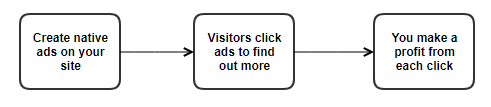
Technical Overview of Click Arbitrage Processes
In terms of infrastructure, the workflow begins with the identification of a traffic source, such as Outbrain. The user creates a bridge page or a lander that serves as an intermediary between the ad and the revenue-generating search feed. This bridge page ensures that the traffic is relevant enough to trigger high-value ads on the search feed side. Unlike traditional e-commerce, there is no physical product being sold; the item being traded is purely human attention and intent.
Vital to the process, the framework relies on API integrations or XML feeds from primary search providers like google adwords arbitrage (RSOC), Bing, or Yahoo. These feeds distribute dynamic search results that are customized to the keyword passed through the URL variable. As soon as a visitor clicks a sponsored link on that feed, the arbitrageur collects a portion of the advertiser's bid. A professional detail is that the latency of the landing page considerably affects the conversion rate, as users will exit the funnel if the redirect takes longer than a few seconds. Ensuring high server speeds is thus a non-negotiable technical standard.
Actionable Steps for Traffic Arbitration Success
To achieve steady results, one must zero in on high-intent niches such as insurance. In these verticals, the RPC can often exceed $5.00, allowing for a wider margin when buying traffic at $0.50 per click. Operators must rigorously test their creative assets to lower their initial CPC. Additionally, successful campaigns usually involve query mapping, where the ad copy precisely matches the search terms displayed on the destination page. This alignment is what avoids high bounce rates and ensures high click-through rates on the feed itself.
Based on field experience, it becomes apparent that the Social-to-Search path is more unpredictable than Native-to-Search. Discovery ads effortlessly mimic the look and feel of news articles, leading to a more robust quality score from the search feed providers. It is suggested to launch with small budgets to gauge the RPC before growing spending. Importantly, if the click-to-search rate is below 20%, the campaign is likely struggling and requires an immediate redesign of the landing page elements.
Benefits and Risks of Click Arbitrage Strategies
The chief strength of this business is its incredible scalability. As opposed to traditional retail, you don't need to worry about inventory, ppc arbitrage shipping, or customer support. If a profitable setup is found, you can massively boost your daily spend to generate larger profits. Moreover, the revenue cycles from major search feeds are consistent, providing a secure cash flow for growth purposes.
On the other hand, the drawbacks are notably significant. Media buyers are entirely dependent on the policies of outside platforms. A single guideline change on Google or Facebook can end a profitable revenue stream overnight. Additionally, the margins can be slim, often sitting between 10% and 30%. This means that a minor increase in traffic costs can quickly turn a lucrative campaign into a loss-making one. It is imperative to continually track campaign performance to reduce these monetary pitfalls.
Summary and Key Takeaways on Traffic Arbitrage
To wrap up, answering the question of What Is PPC Arbitrage and How Does Click Arbitrage Actually Work? demonstrates a sophisticated commercial strategy that requires technical knowledge. Although the obstacles to entry have risen over the years, the prospect for major returns remains evident for those who focus on compliance and data analysis. This model is best suited for experienced media buyers who can work through the volatility of the digital advertising ecosystem.
Looking ahead, the viability of traffic arbitrage will rely on the capacity to leverage AI-driven optimization tools and locate unsaturated traffic sources. Compared to standard affiliate marketing, arbitrage delivers more rapid feedback loops but necessitates more rigorous budget management. For teams with the proper technical stack and data-driven mindset, it stays a very effective way to generate revenue in the traffic arbitration niche. The key is perpetual adaptation.
Frequently Asked Questions About PPC Arbitrage
Q: What Is PPC Arbitrage and what are the first steps?
A: The process involves buying traffic at a minimal cost and monetizing it to a higher-paying search feed. To start, you need to apply for a search feed provider and choose a high-intent niche like finance or legal services.
Q: How does Click Arbitrage actually work when using social media traffic?
A: Marketers create ads on platforms like Facebook that send users to a bridge page containing related search terms. As the user interacts with the search links on the final page, the spread between the ad cost and the click revenue results in profit.
Q: Is PPC arbitrage against the terms of service of major networks?
A: It isn't illegal, but it must be done with careful adherence to platform policies regarding landing page quality. Many networks demand that the user gets genuine value from the intermediate page to stop account suspensions.
Q: What is a typical profit margin in traffic arbitration?
A: Average campaigns generate a margin ranging from 15% to 35%. Nevertheless, highly refined campaigns in competitive niches can potentially reach margins of 50% or more under peak conditions.
Q: How much capital is needed to start with this strategy?
A: Experts recommend starting with at least $1,000 to $2,000 to adequately test keywords and creatives. This budget enables you to collect enough data to find which segments are winning.
Q: What is a common mistake that ruins arbitrage campaigns?
A: Neglecting to check the Revenue Per Click (RPC) daily is a significant error. Because keyword values shift, a campaign that was profitable yesterday could quickly become a failure if the feed provider drops their rates.
- 이전글비아그라를 꾸준히 먹으면 내성이 생기나요? 26.07.03
- 다음글비아그라 첫 구매 후기, 후회 없는 선택일까? 26.07.03
댓글목록
등록된 댓글이 없습니다.